Weaning a Baby: A Simple Guide for Nannies
A practical guide to starting solid foods, safe mealtimes, first foods, allergies, and talking to parents.
Food & Nutrition · 8 min read
Level: Intermediate
"Weaning" means slowly starting to give a baby solid food as well as milk. Most babies start weaning at around 6 months old. As a nanny, you may prepare meals, feed the baby, and tell the parents how the baby is eating.
Weaning is a big step, and every family does it a little differently. Always follow the parents' plan. They decide when to start, which foods to try, and which method to use. Your job is to help, to keep the baby safe, and to share what you notice.
Is the baby ready?
Babies are usually ready for solid food when they can do three things:
Sit up and hold their head steady.
Look at food, pick it up and put it in their mouth by themselves.
Swallow food, instead of pushing it back out with their tongue.
If you notice these signs, you can tell the parents: "I think she might be ready to try some food. She's watching us eat and reaching for things."
Two ways to start
Parents usually choose one of these methods, or a mix of both.
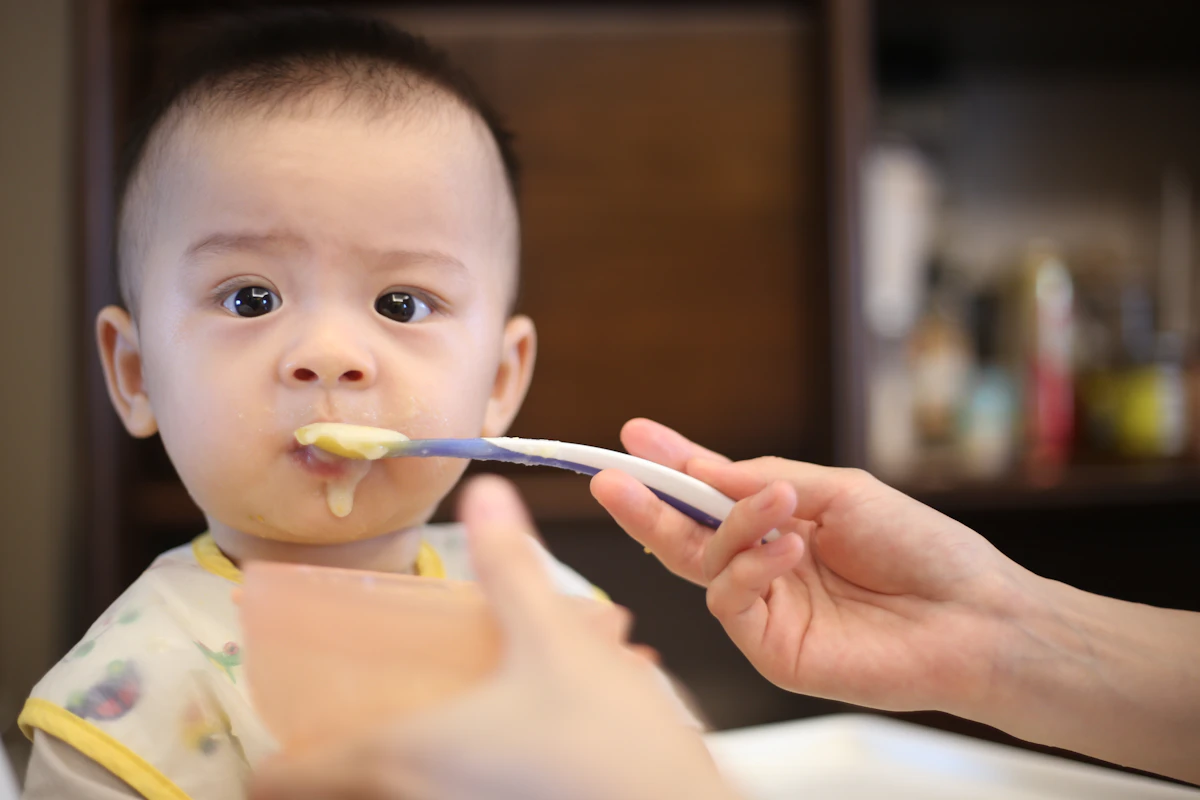
Spoon-feeding (purées). You make soft, smooth food and feed the baby with a small spoon. Later, you make the food thicker and lumpier.
Baby-led weaning. The baby feeds themselves with soft finger foods, such as a stick of cooked carrot or a piece of ripe banana. It's messy, but babies learn to chew and hold food.
Ask the parents: "Would you like me to use a spoon, or let him feed himself?"
First foods
At the start, the baby is only tasting and learning. Milk is still their main food, so don't worry if they only eat one or two spoonfuls.
Good first foods include:
Vegetables: broccoli, carrot, sweet potato, parsnip, cauliflower
Fruit: banana, avocado, apple or pear (peeled and cooked until soft)
Porridge or oatmeal either on its own or mixed with the baby's usual milk
Many experts suggest starting with vegetables, especially bitter ones like broccoli, because babies already like sweet tastes. It can take 10 or more tries before a baby accepts a new food. Don't give up after one "yuck" face!
The next stages
Around 6 months: Smooth or mashed food, or soft finger foods. Once or twice a day.
Around 7–9 months: Thicker, lumpier food. More finger foods. Slowly build up to three meals a day. Add foods with iron, like meat, fish, eggs, beans and lentils.
Around 10–12 months: Chopped food and family meals (without added salt). The baby may also have healthy snacks.
Foods to avoid before 12 months
Honey: it can make babies very ill.
Salt: don't add it to food, and avoid salty foods like crisps, bacon and stock cubes.
Sugar: don't add it to food or drinks.
Whole nuts: a choking risk. Smooth nut butter may be fine if the parents agree.
Cow's milk as a drink: it's fine in cooking, but not as the main drink.
Some cheeses: avoid soft, mould-ripened and unpasteurised cheeses (like brie or camembert).
Always check with the parents before giving allergy foods for the first time. These include eggs, peanuts, milk, fish, wheat and sesame. Usually, parents introduce these one at a time, in small amounts, and often at home first.
Staying safe at mealtimes
Always sit the baby upright in a high chair, with the straps on.
Never leave the baby alone while they are eating, not even for a minute.
Cut small round foods lengthways into quarters, e.g. grapes, cherry tomatoes and blueberries.
Make food soft enough to squash between your finger and thumb.
Check the temperature of warm food before you feed the baby.
Gagging or choking?
Gagging is normal. The baby coughs, makes noises, their face may go red, and they push the food forward. This is how they learn. Stay calm and let them sort it out.
Choking is an emergency. The baby can't cough, cry or breathe properly, and may make no sound at all. You must act immediately. Every nanny should do a paediatric first aid course, so you know exactly what to do.
Signs of an allergic reaction
Watch for a rash, itchy skin, swelling around the mouth or eyes, sickness or diarrhoea. Stop feeding and call the parents. If the baby has trouble breathing, or their face, lips or tongue swell, call the emergency services straight away. (In the US, call 911.)
Talking to the parents
Parents love to hear about mealtimes. Keep a short daily note or send a message.
Useful phrases:
"She tried sweet potato today and ate about half the bowl."
"He didn't like the broccoli, but I'll try again tomorrow."
"Is it OK if I give her some scrambled egg?"
"He had a small red rash around his mouth after lunch. It went away after 20 minutes."
"We're running low on carrots. Could you pick some up?"
Vocabulary
WordMeaning
to weanto start giving a baby solid food
puréefood blended until it is smooth
finger foodfood a baby can pick up and hold
high chaira tall chair for babies to sit in at mealtimes
biba cloth or plastic cover to keep clothes clean
to gagto cough and push food forward (normal)
to chokewhen food blocks the airway (an emergency)
allergywhen the body reacts badly to a food
lumpynot smooth; with small pieces in it